
Bringing Light Into Jewish Homes
Chana: Menucha, how did you first enter the world of art?
Menucha: Honestly, it’s not something I “entered.” I’ve always been there. I was drawing from the time I was a little child. Years later I met my kindergarten teacher again, and she told me she still remembered how beautifully I used to draw. For me, art was never a hobby—it was simply part of who I am.
Chana: Was there something in your childhood that influenced the themes you paint today?
Menucha: Very much so. A big part of my childhood was spent in Meah Shearim, often at my grandmother’s home. I experienced the atmosphere of the neighborhood—the Shabbos tables, the families, the special feeling of the holidays. Those memories stayed with me. Later, when I began painting, I found myself drawn to those kinds of figures: the white kapotes, the traditional clothing, the scenes of Jewish life. They are so rich visually, and they carry so much feeling.
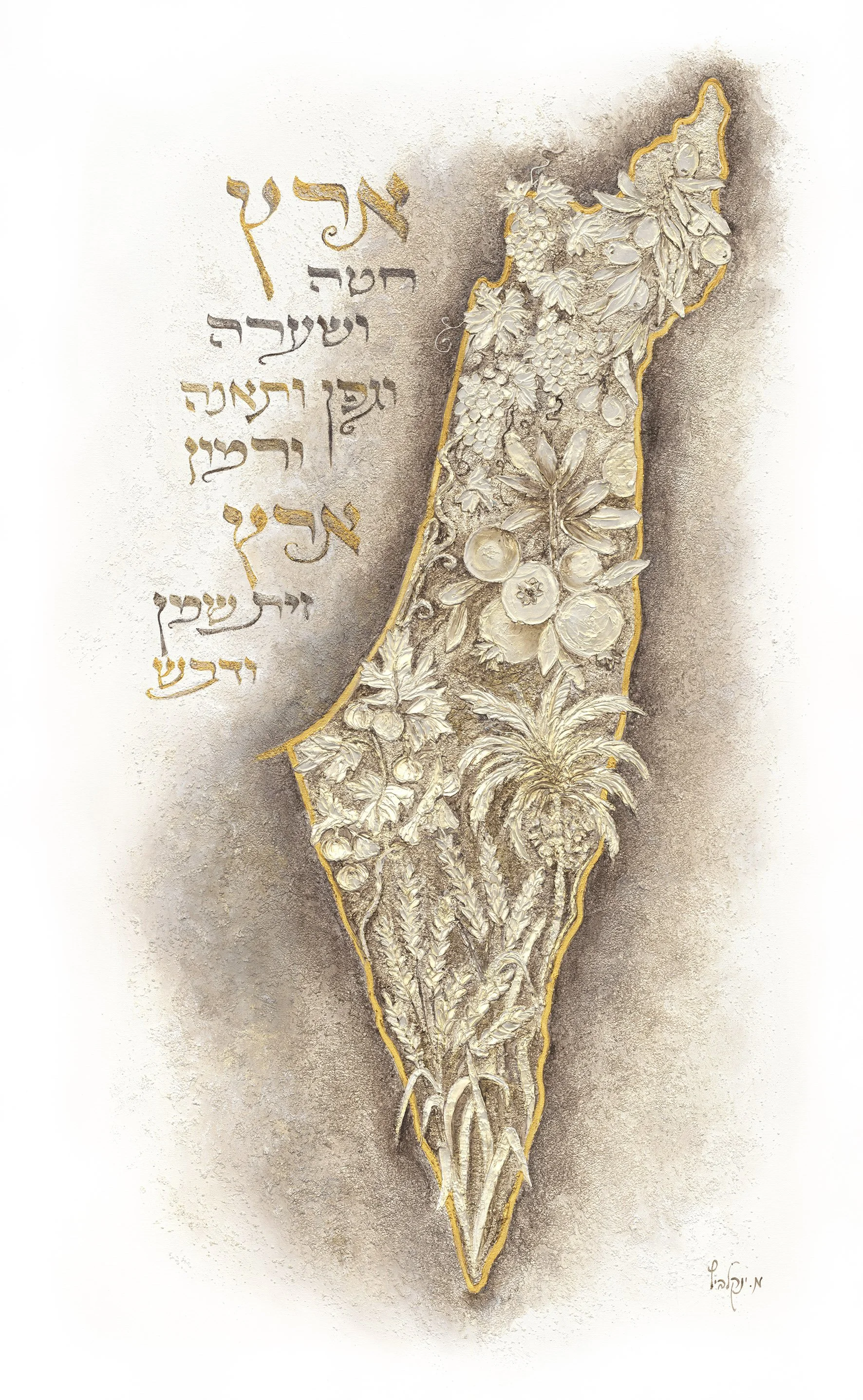
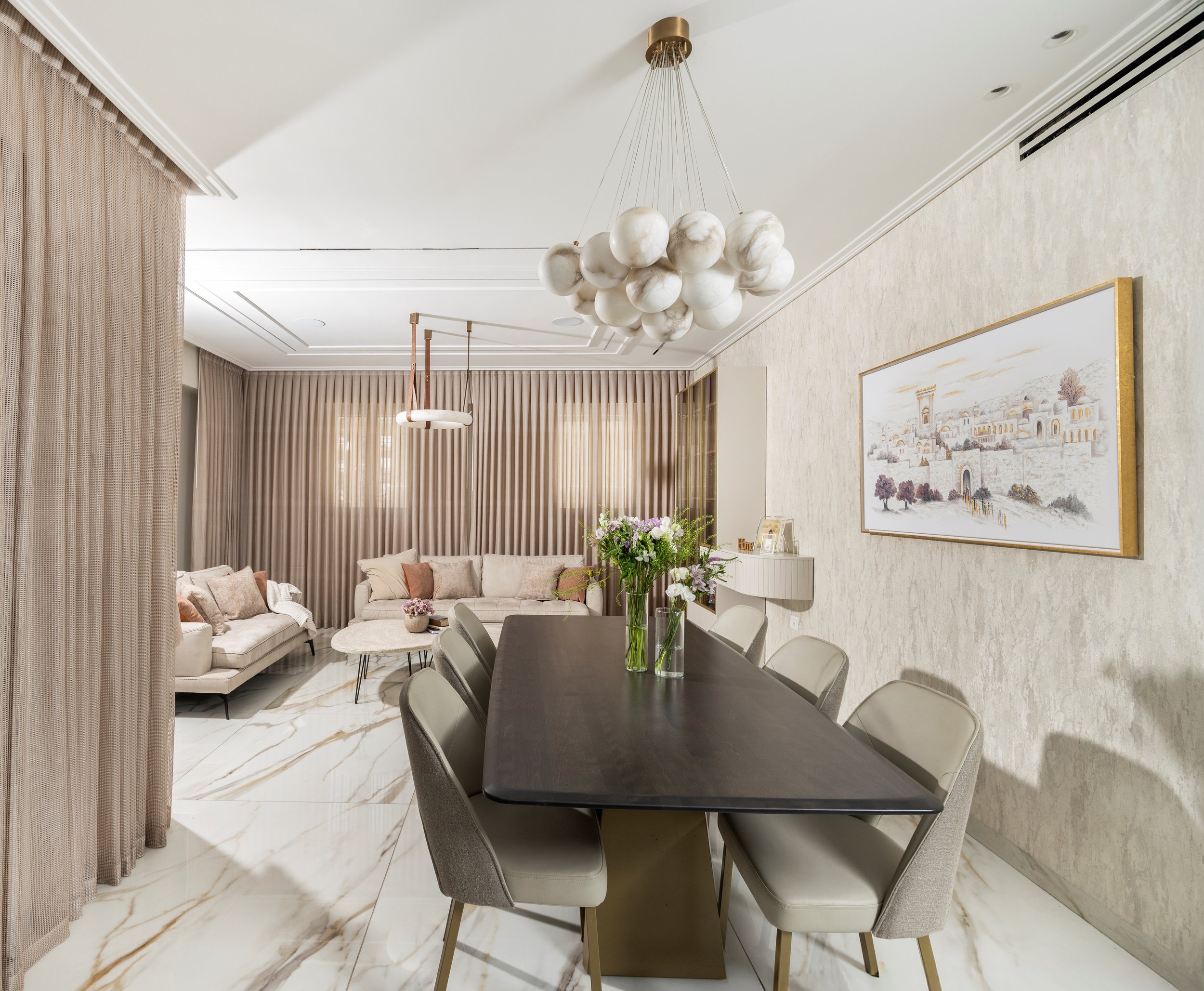
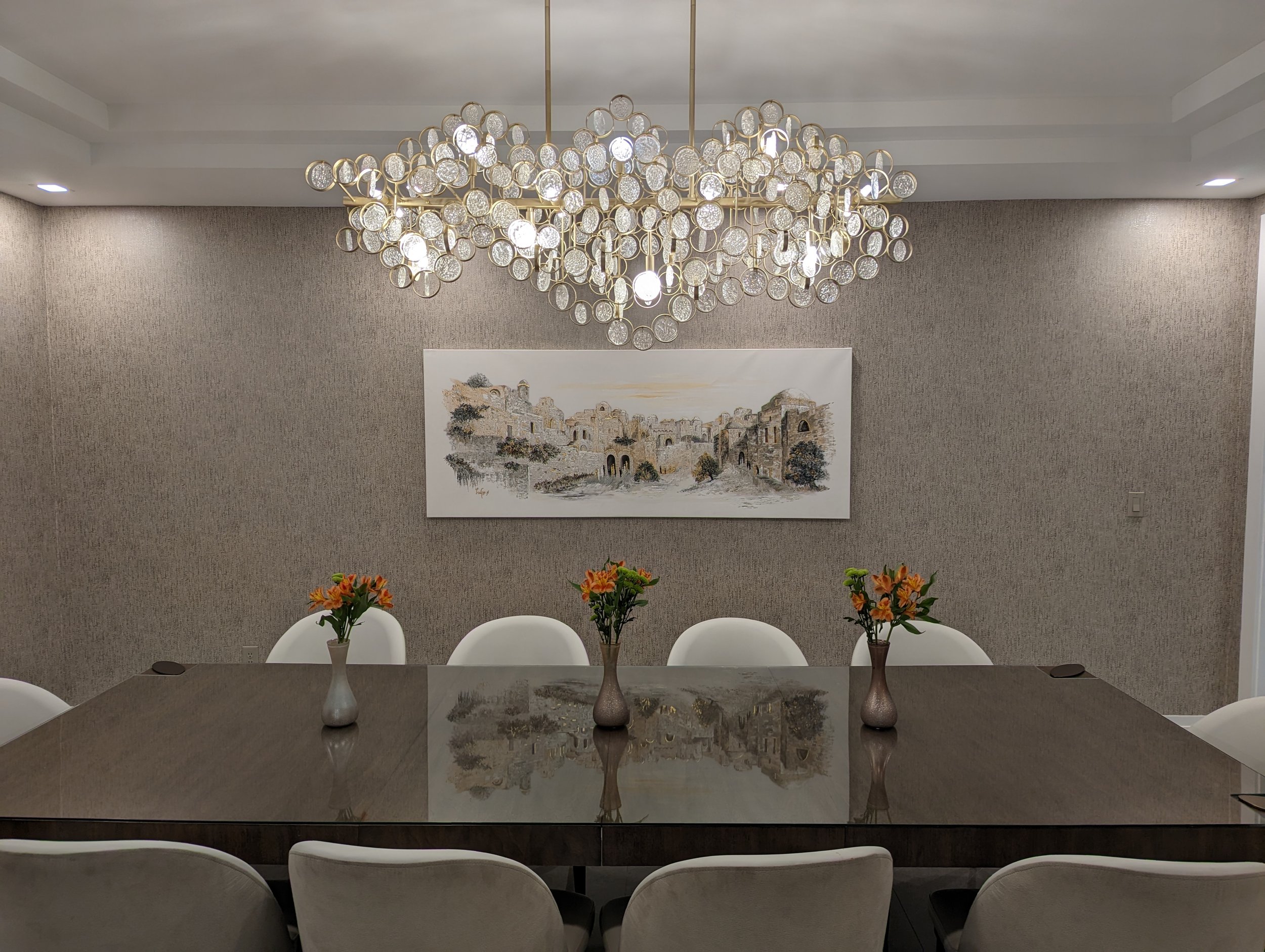
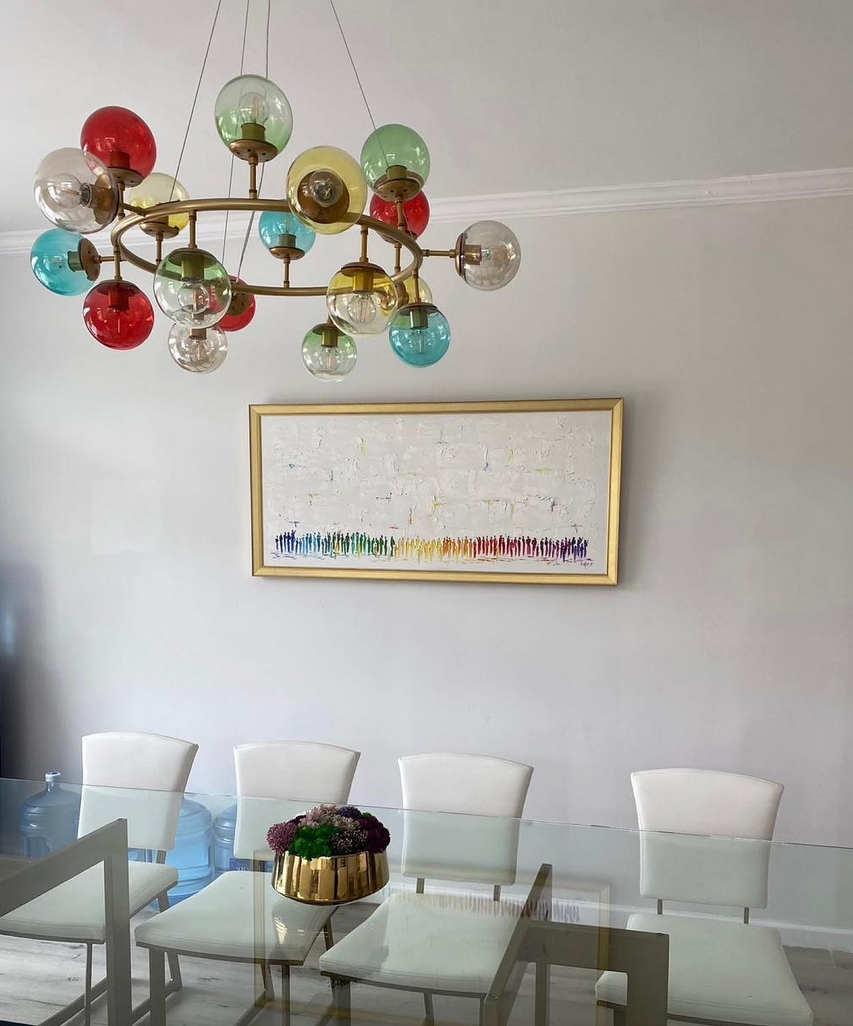
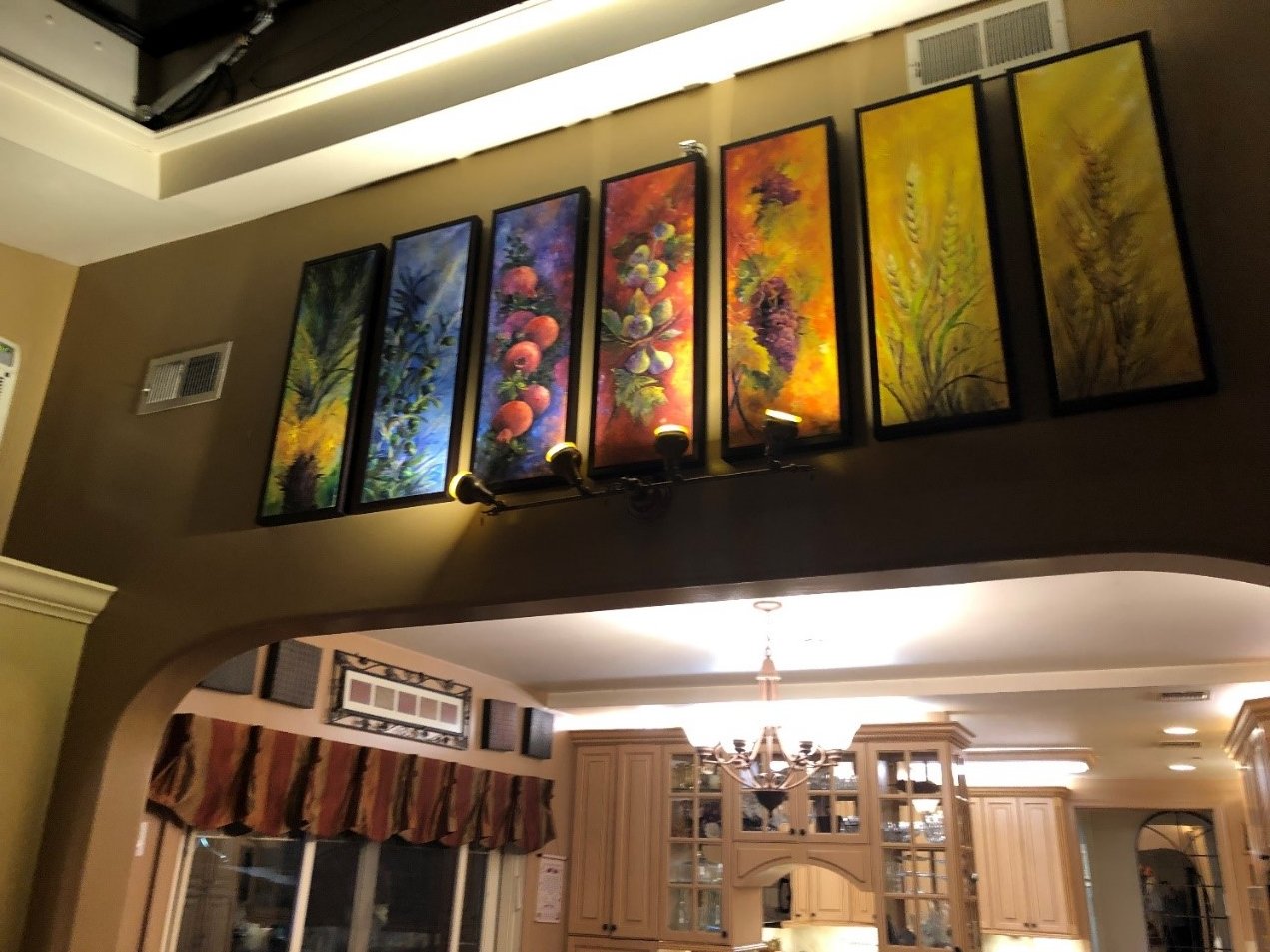
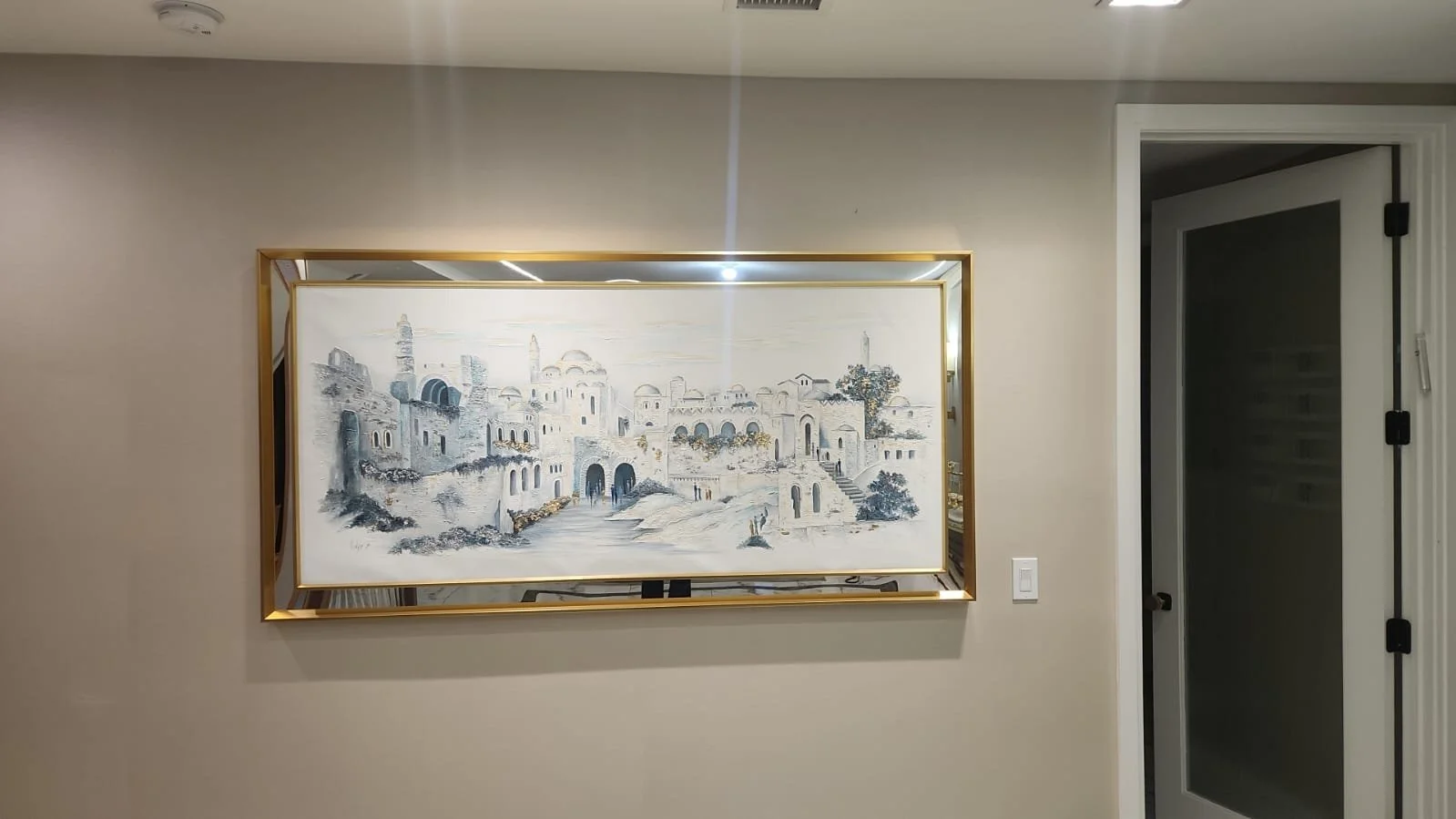
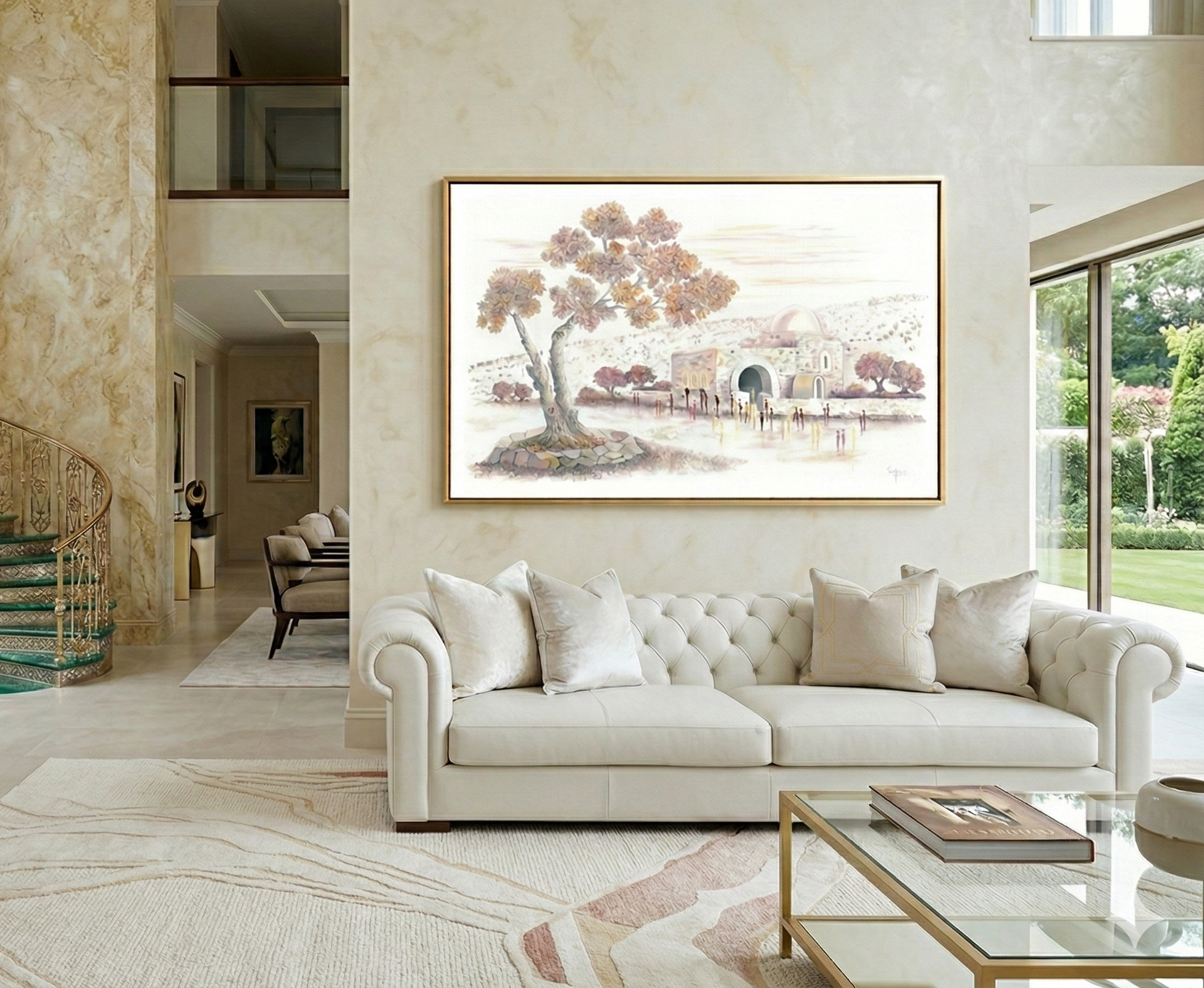
Artwork by Menucha Yankelevitch
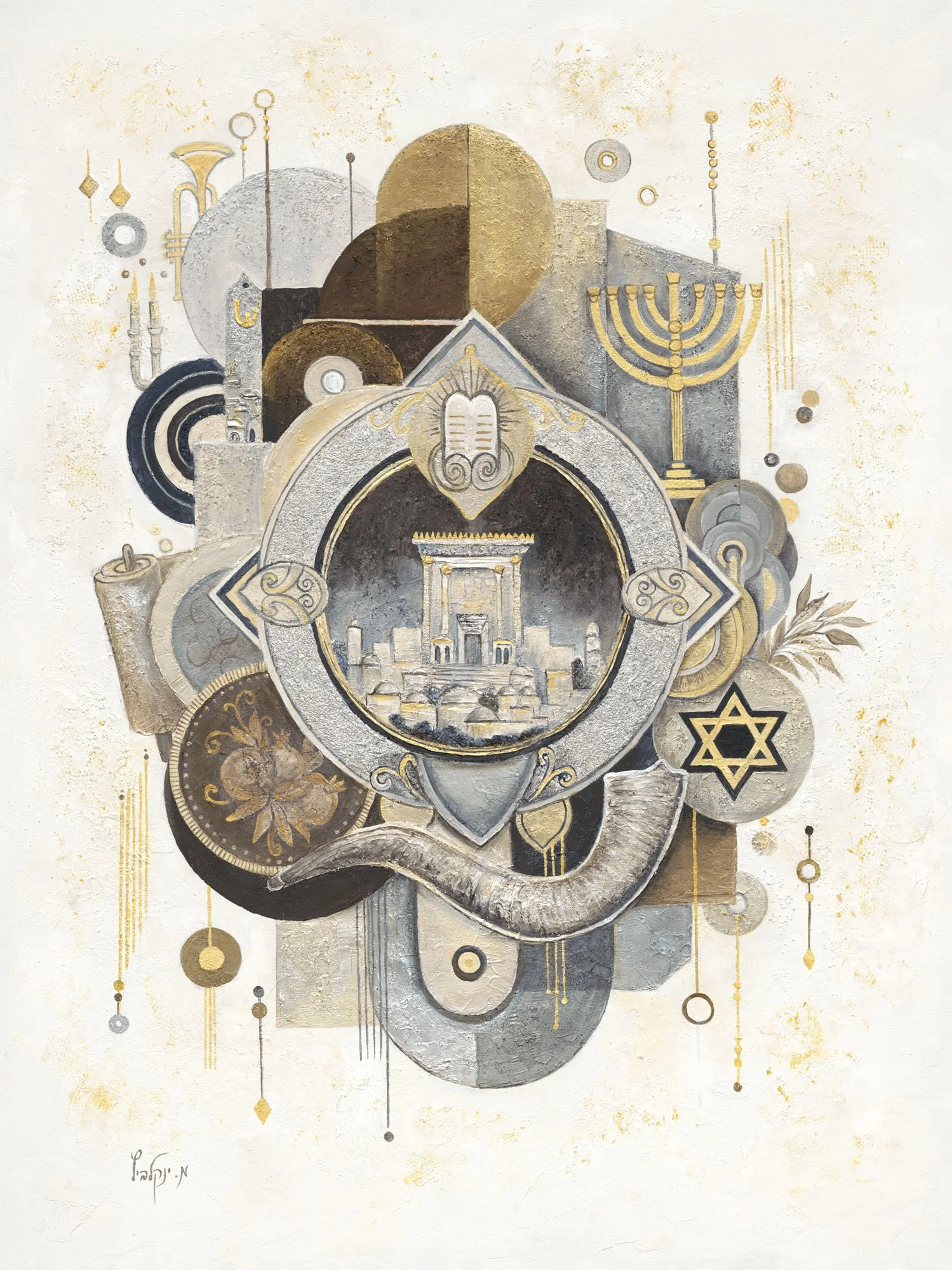
Artwork by Menucha Yankelevitch
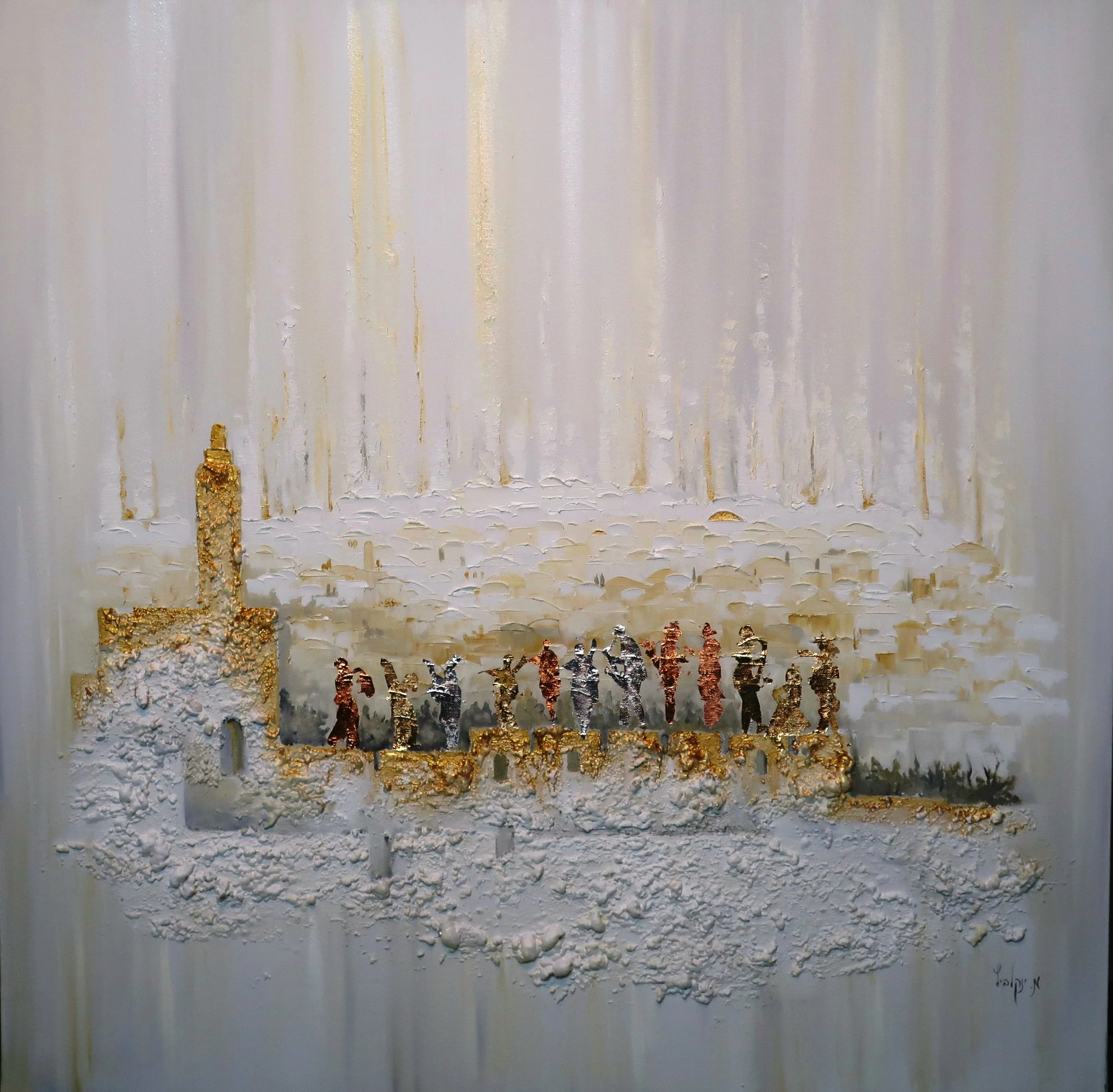
Artwork by Menucha Yankelevitch
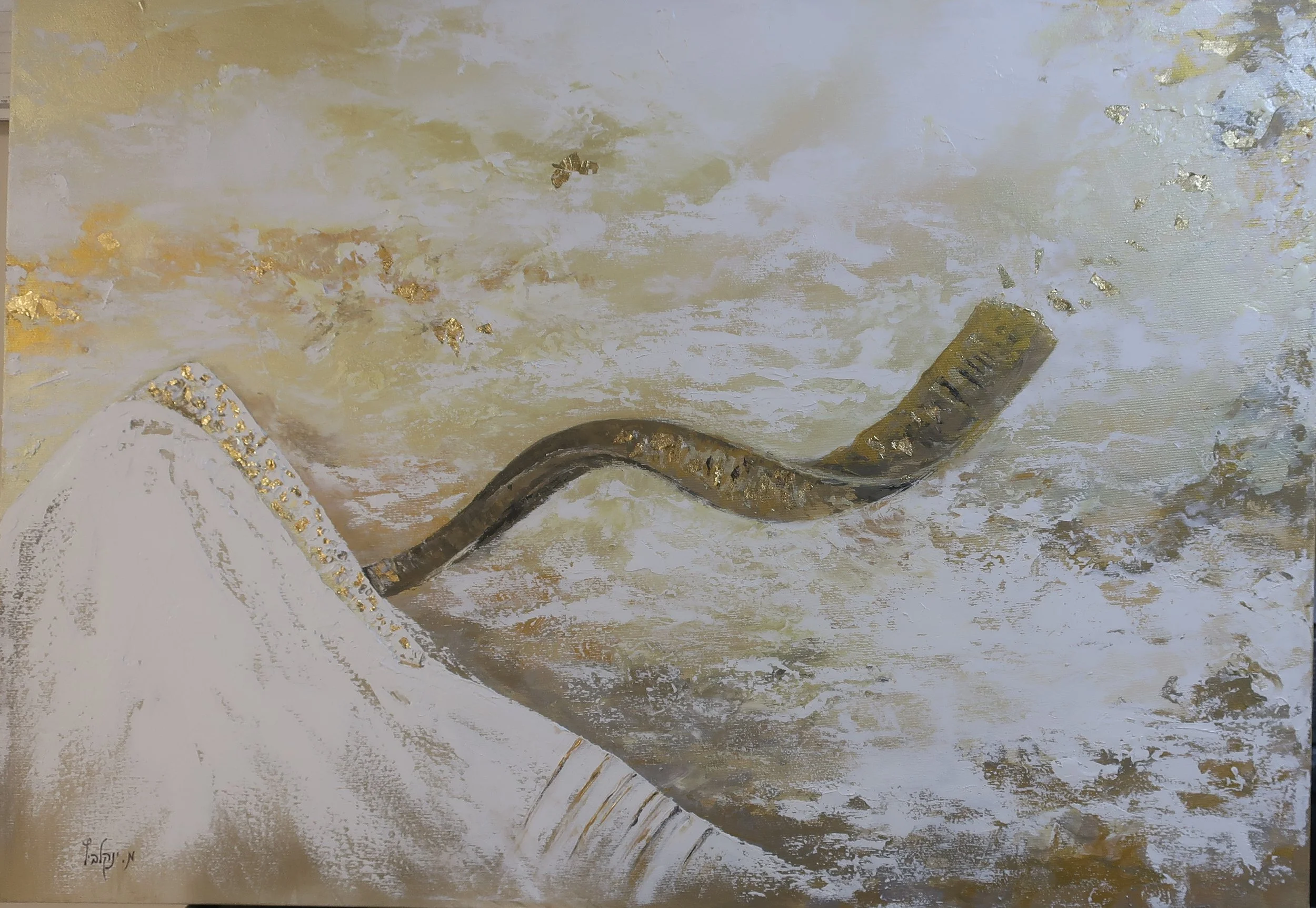
Artwork by Menucha Yankelevitch
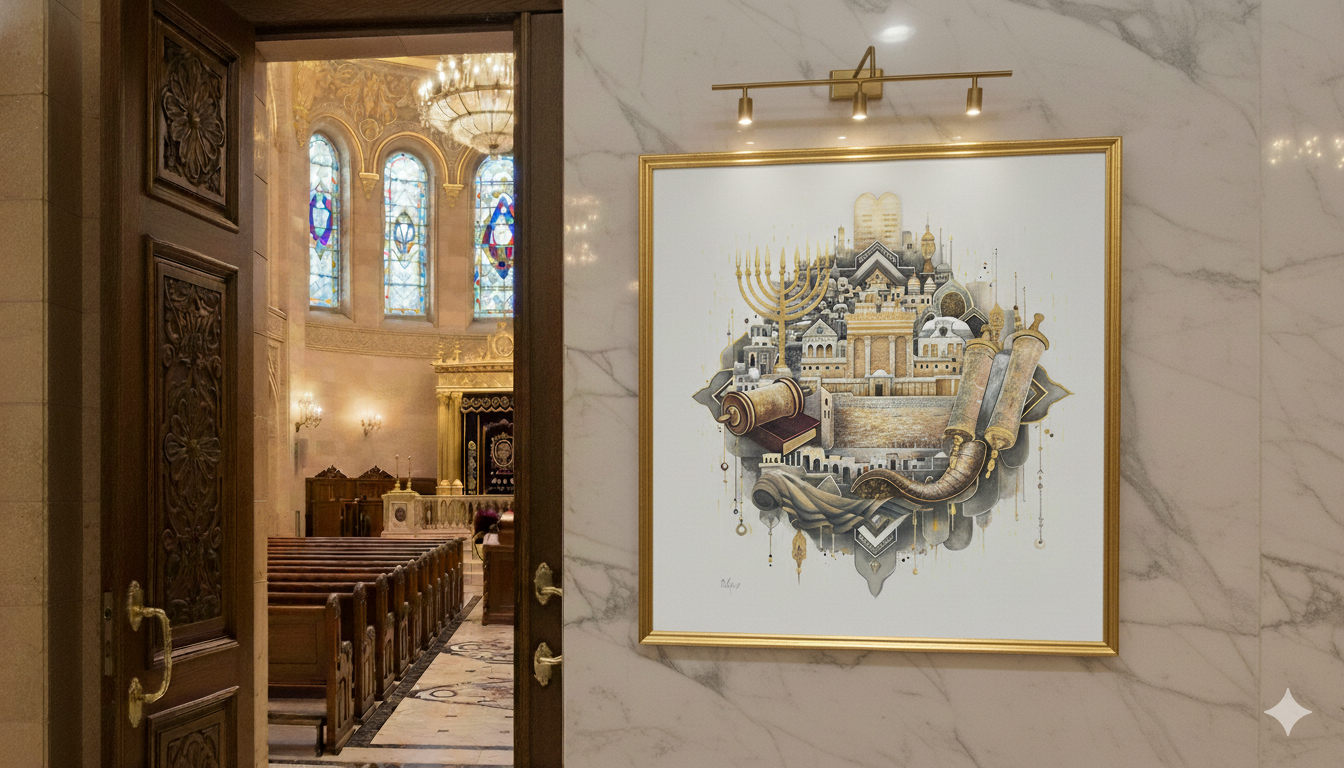
Artwork by Menucha Yankelevitch
Chana: Your work includes many different types of projects. Can you tell us about one that was particularly memorable?
Menucha: One project that really challenged me was a very large artwork built around the idea of “Eishes Chayil.” It included many different scenes and family memories—children, grandchildren, everyday moments. At first I was almost afraid to take it on. I didn’t want to produce something that felt messy or superficial.
Then I had an idea: to connect everything through the image of a pearl necklace surrounding the central theme. Each “pearl” would contain a small scene. That way, the many images would feel unified instead of chaotic.
In the end it came out beautifully. Sometimes the projects that feel most intimidating at the beginning turn out to be the most meaningful.
Chana: It sounds like you enjoy challenging yourself artistically.
Menucha: Absolutely. Even when I don’t have a project, I create projects for myself. For example, I recently decided to paint a series of musicians dancing and playing instruments. I like working in series because it pushes me to explore a theme deeply. Instead of painting one picture, I paint many variations. That’s how you really grow as an artist.
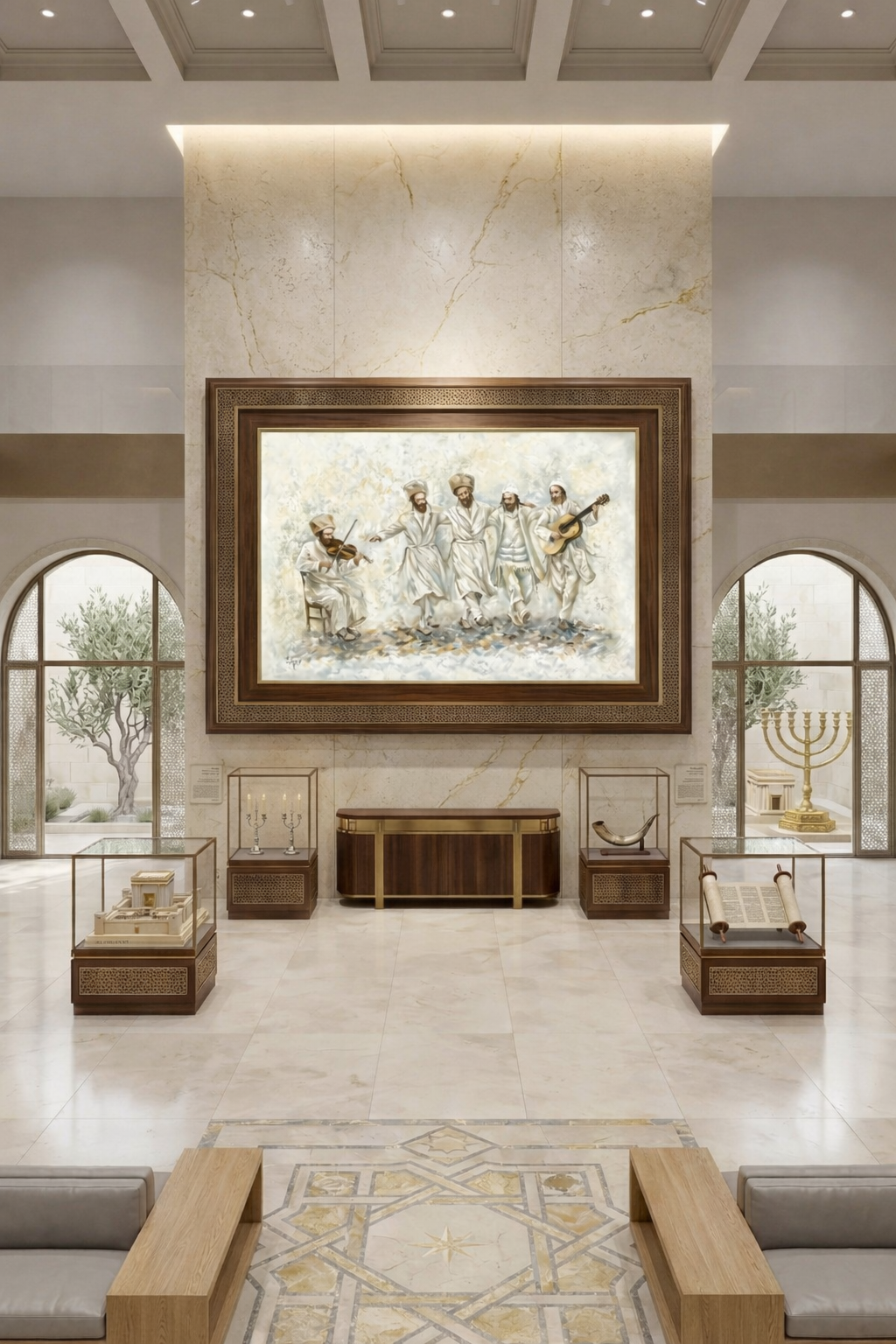
Artwork by Menucha Yankelevitch
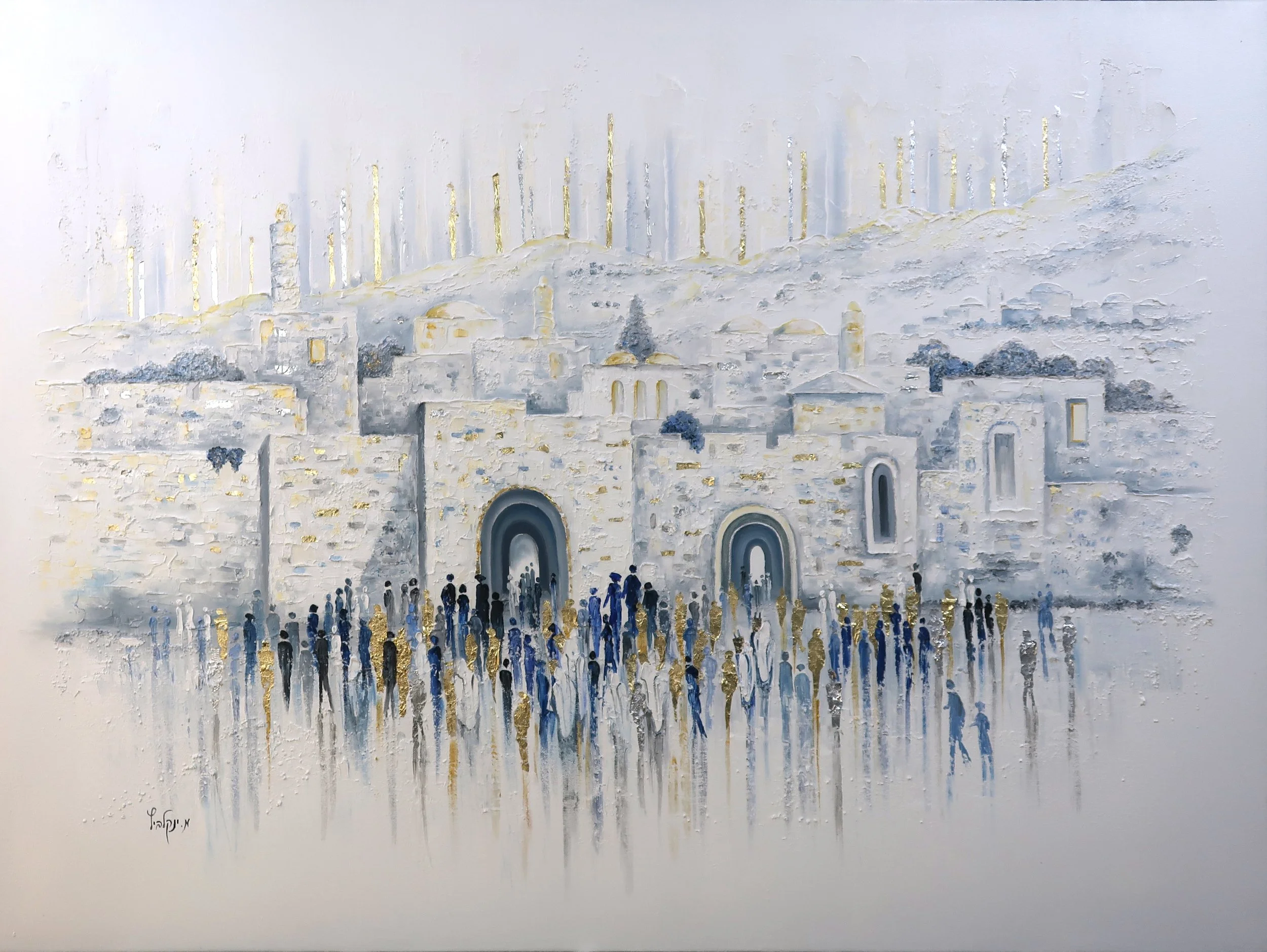
Chana: One of the themes most associated with your work is the Kotel. You’ve painted it many times.
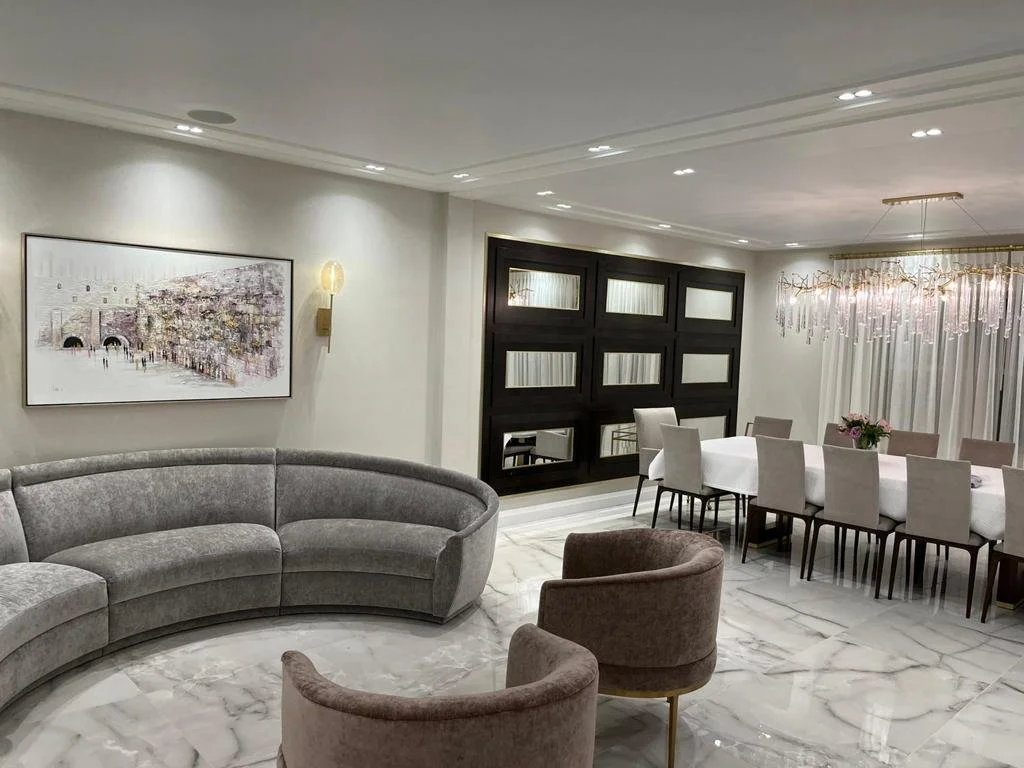
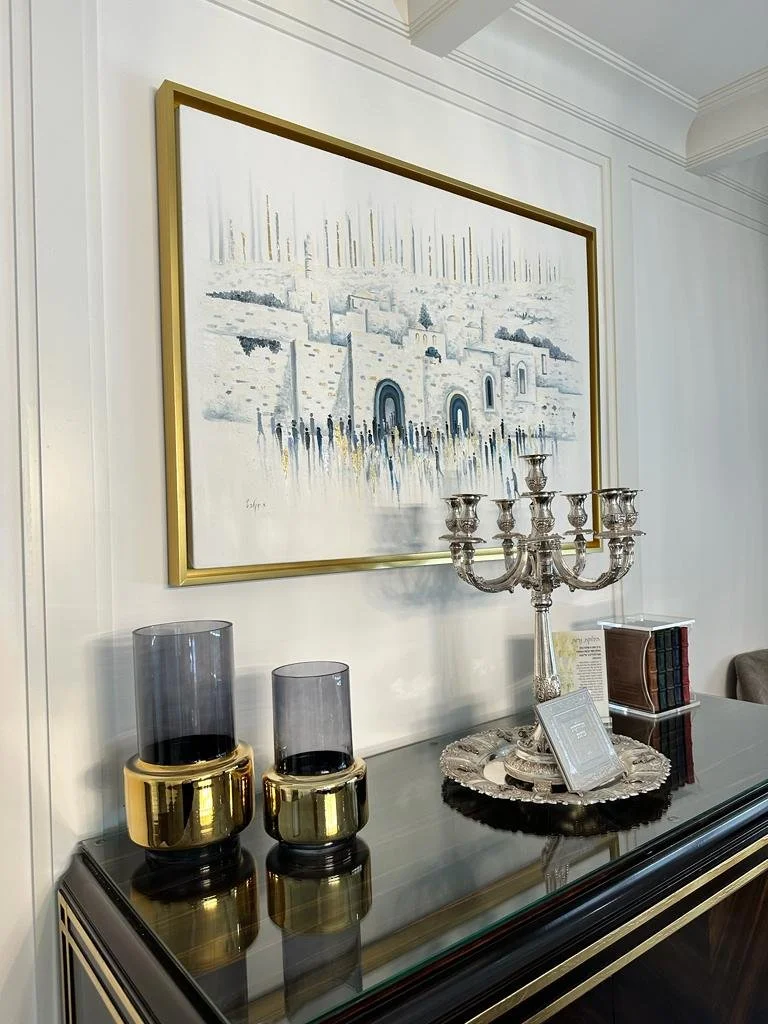
Menucha: Yes, the Kotel is very central to my work. I’ve painted it from so many perspectives—the stones, the pigeons, the people praying, the light above it. Each painting focuses on something slightly different.
I once counted that I had painted more than two hundred Kotel scenes.
Chana: Wow. That’s incredible.
Menucha: The Kotel contains endless inspiration. Every angle tells another story.
Sometimes I also allow myself artistic freedom. For example, in one painting I included the Beis Hamikdash above the Kotel, even though historically it wouldn’t appear exactly that way from that angle. But my goal was to convey a message—that when a person stands at the Kotel, their prayers are directed toward the rebuilding of the Beis Hamikdash.
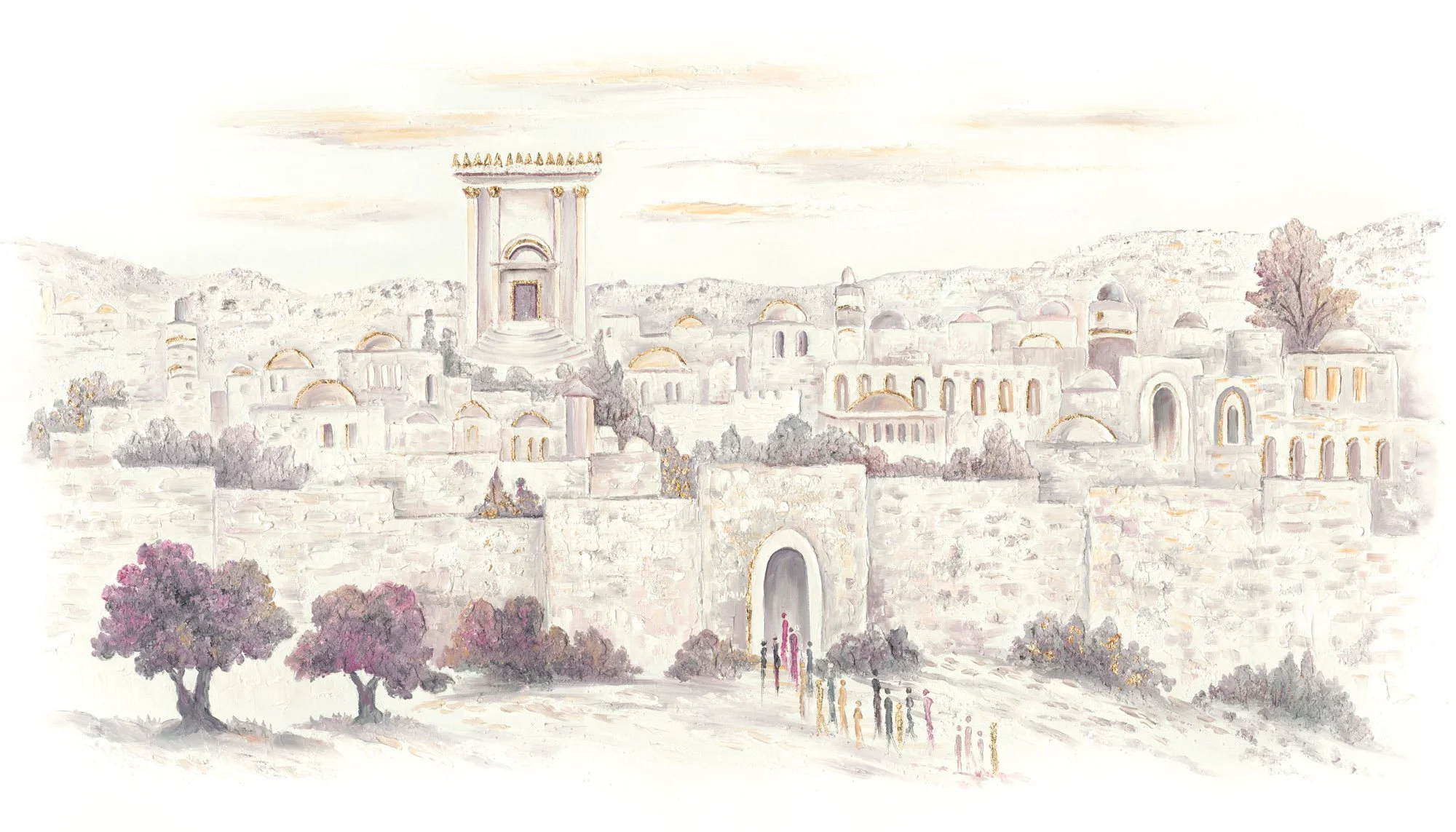
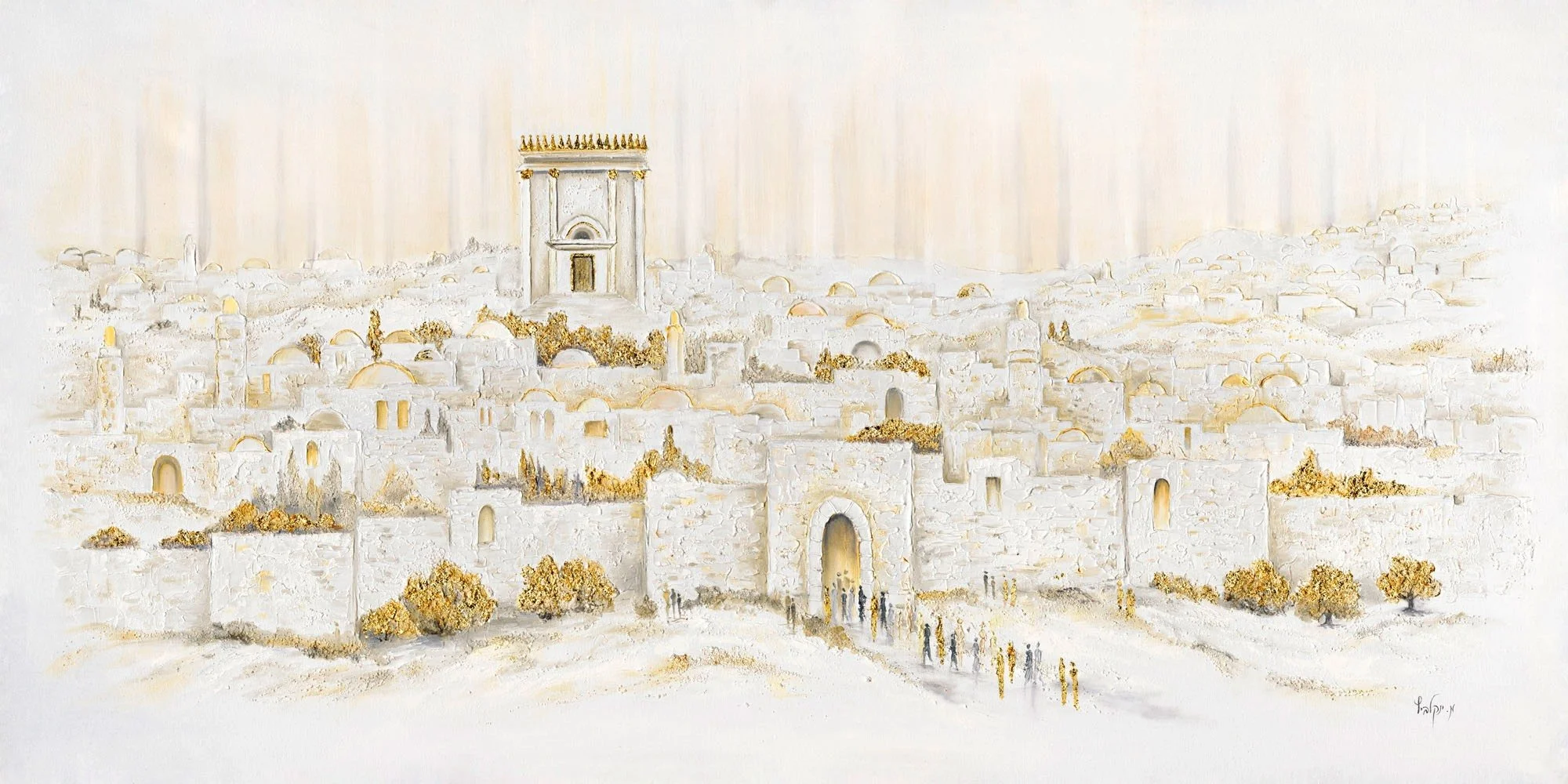
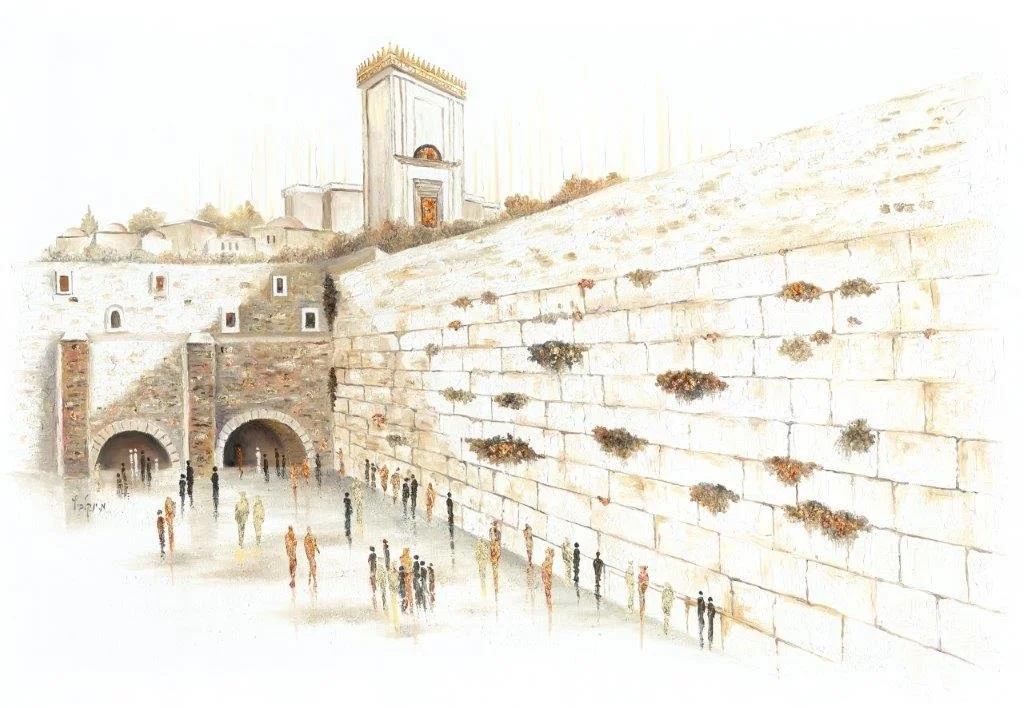
So sometimes I’m willing to depart from strict realism if it helps express the deeper idea.
Chana: Your style has also evolved a lot over the years.
Menucha: Yes. In the beginning I worked mostly in a realistic style. Over time I felt a strong need to search for something new—something more contemporary.
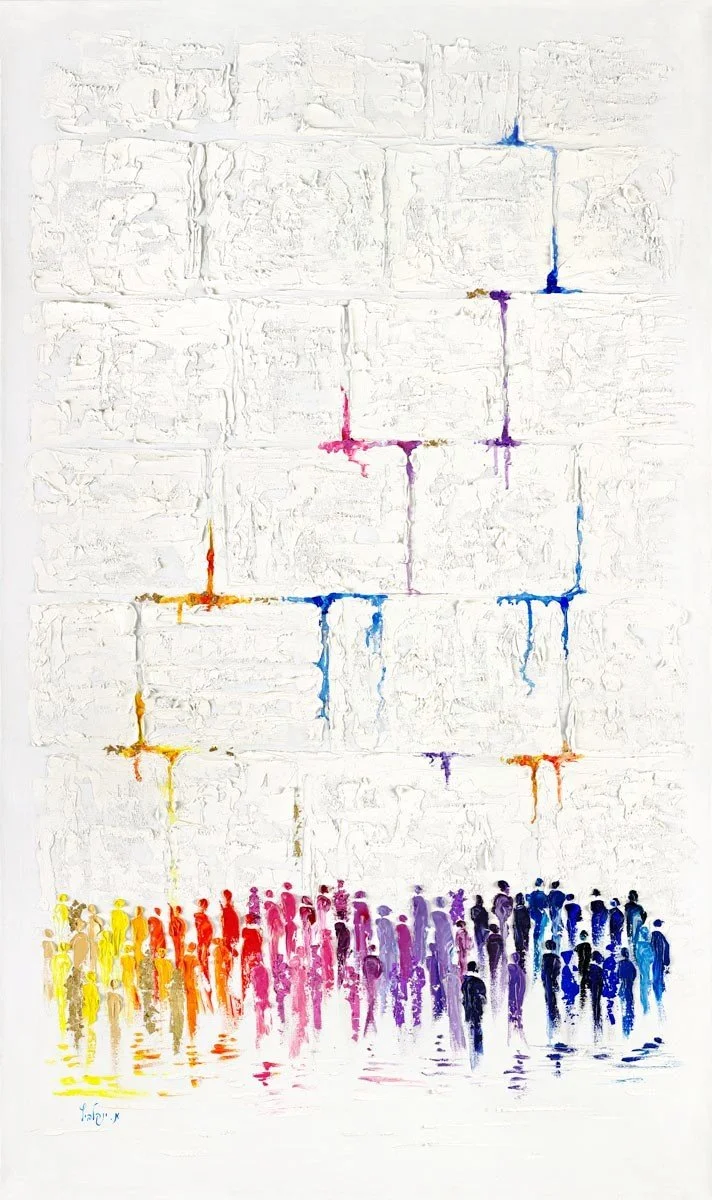
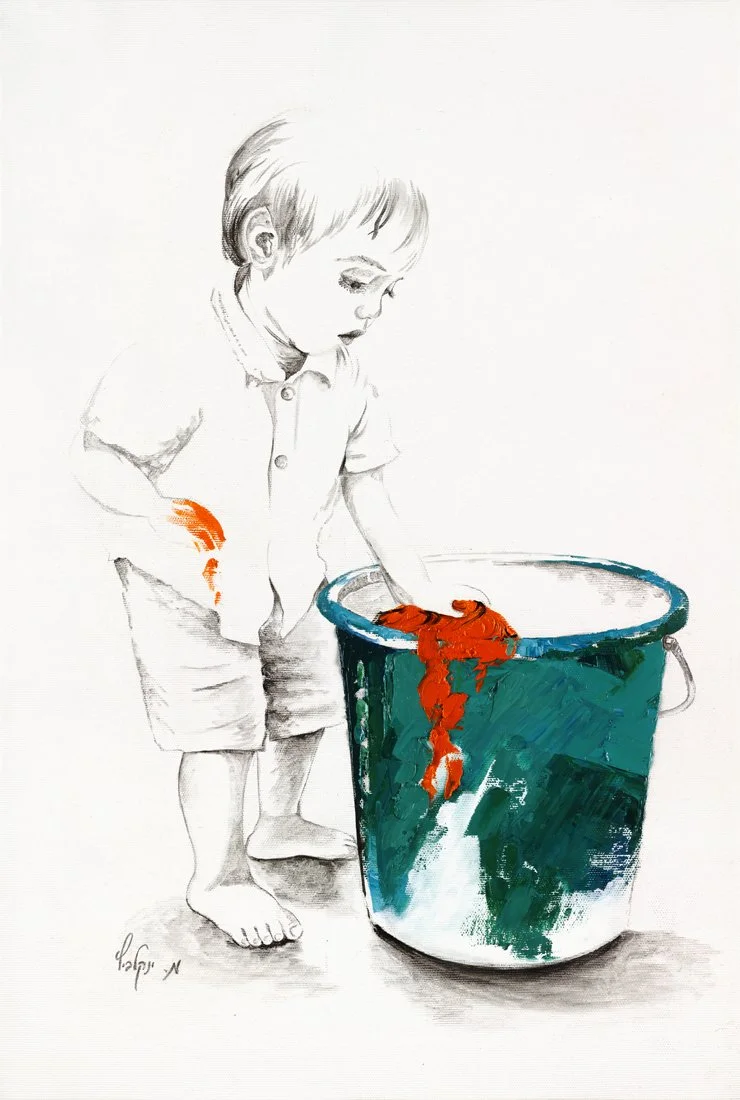
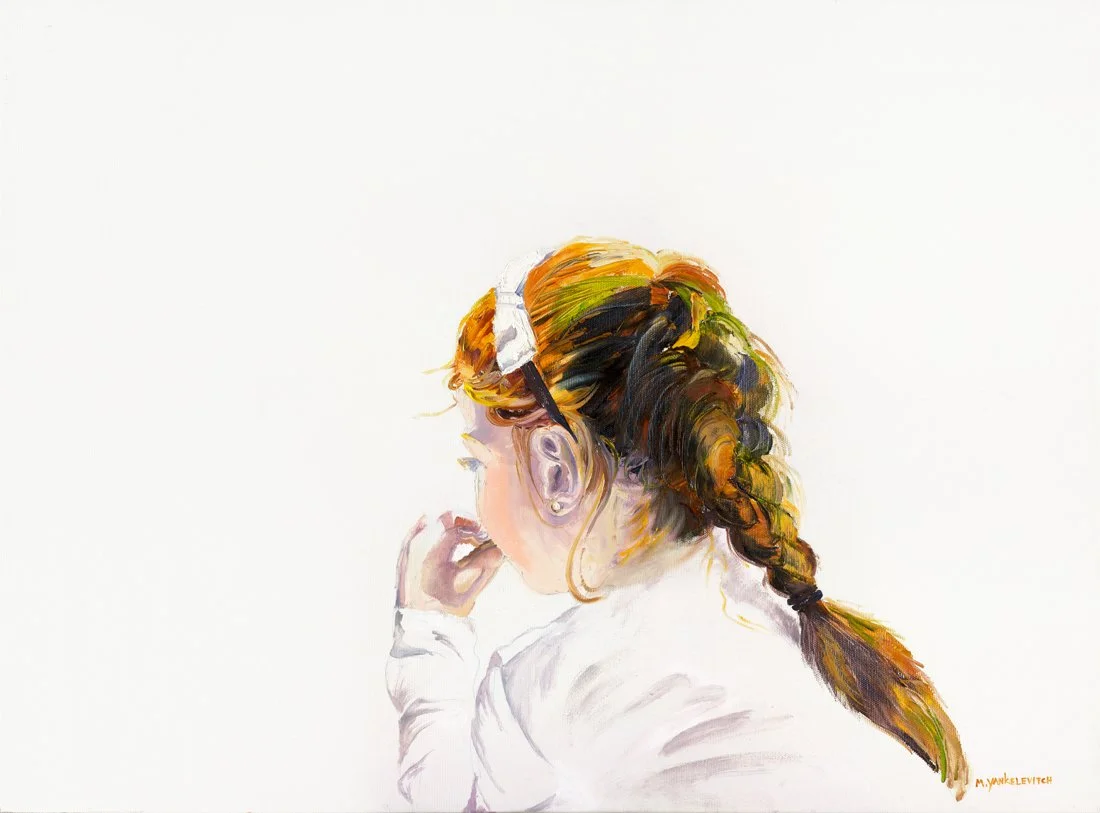
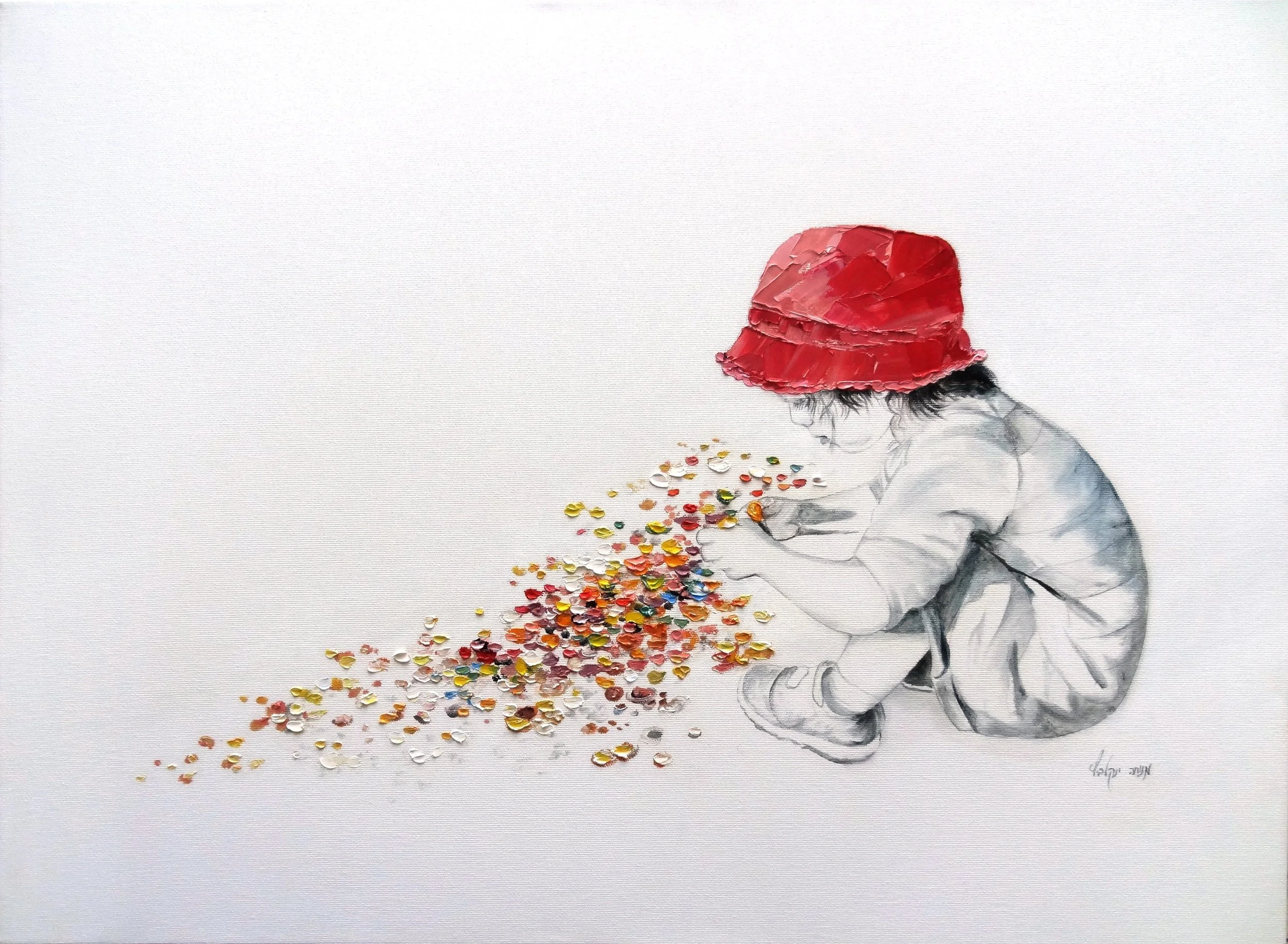
There was a period when I experimented with very delicate figures against white backgrounds, with bold patches of oil paint for contrast. I loved the freshness of that look, but I kept asking myself: how can I bring this style into Judaica?
Then one day I had the idea to paint the Kotel in white, with the people rendered in vibrant rainbow colors. That was the moment when I felt I had found a new visual language.
People responded very strongly to it, and it gave me the confidence to continue developing that style.
Chana: You once mentioned a painting of a girl with oranges. Can you tell us about that piece?
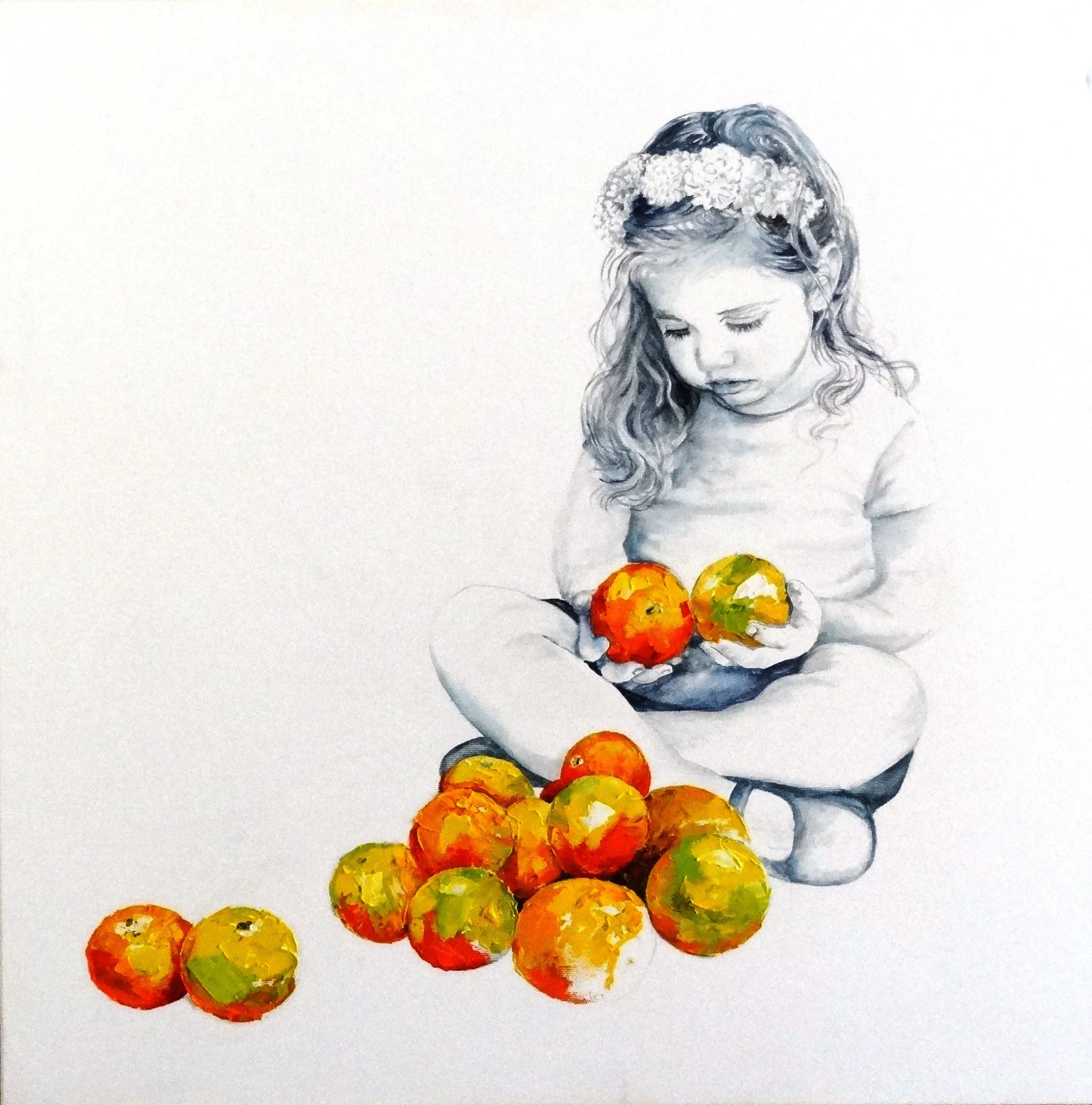
Menucha: At one point I was searching very intensely for a new artistic style. I began experimenting with paintings of children on a white background. The children themselves were painted in a very soft and delicate way, but I added one bold element with thick oil paint.
Chana: What made that painting unique?
Menucha: In one painting, there was a little girl playing with oranges. The girl was painted very softly and gently, but the oranges were painted with thick, expressive oil paint. Against the white background, the oranges almost popped out of the painting. The contrast between the delicate figure and the bold oranges created a very exciting visual effect.
Chana: And today we see variations of that style in galleries around the world.
Menucha: Yes, and I feel very grateful for that. When you introduce something new, it takes courage. But if it resonates with people, it can spread very quickly.
Chana: You’ve mentioned that you see your work as more than just decoration.
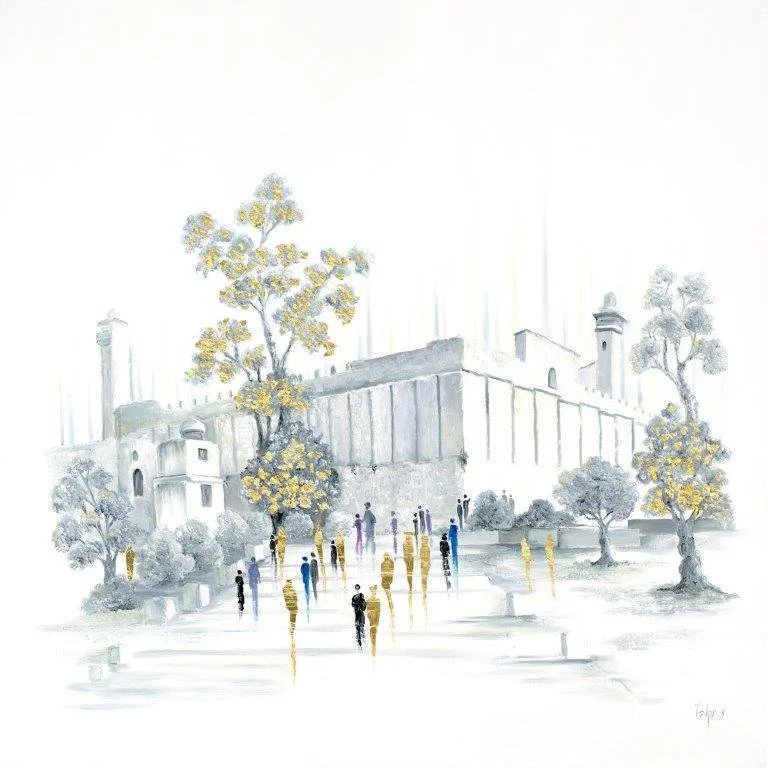
Menucha: Definitely. I feel that art carries energy. A painting isn’t just color and canvas—it carries something of the soul of the person who created it. When people tell me that a painting brings light or joy into their home, that means everything to me.
Chana: Do you have a story that illustrates that?
Menucha: I remember my aunt, a very simple woman with a modest home. She once decided to buy one of my paintings. Afterward she kept calling me again and again saying, “You have to come see how it looks in my house.”
The painting hadn’t changed—but she had. She felt uplifted by having something beautiful that she connected to. It created a special corner in her home, something that gave her strength and joy every day.
That experience showed me how powerful art can be.
Chana: You’ve also said that you feel a sense of mission in your work.
Menucha: Yes. I truly feel that it’s a kind of shlichus. My dream would be that in Jewish homes all over the world there would be artwork that reflects beauty, warmth, and Jewish spirit.
When I hear from people that a painting adds happiness and energy to their home, I feel that the mission is being fulfilled.
Chana: Did that experiment influence your later work?
Menucha: Yes, very much. I loved the effect and began thinking about how I could bring that same idea into Jewish-themed art. That exploration eventually led me to develop the distinctive style that I later became known for.
Chana: One last question. Today we have technologies that can generate images instantly. As an artist who has painted for decades, how do you see the difference between machine-generated images and human art?
Menucha: A painting created by a person carries emotion, personality, and life. It reflects the inner world of the artist.
When someone brings artwork into their home, they’re bringing in that energy. That’s why I believe human art will always have something irreplaceable. The soul of the artist becomes part of the work.
Chana: That’s a beautiful thought. Thank you so much for sharing your story and your inspiration with us.
Menucha: Thank you. It was a pleasure.
